Dignity
A human being is never a means.

 Humanership
A philosophy of leadership founded on dignity, responsibility, growth, service and transmission.
Humanership is not invented.
It is revealed.
Humanership is a philosophy of leadership that places the human being - their dignity, their responsibility and their capacity to grow - at the heart of collective action.
It does not merely seek results, nor merely to direct people. It seeks to create the conditions in which everyone can grow, decide, contribute, pass on what they know, and become able to act without depending on the person who leads.
To lead in a way that makes both the human being and the collective grow.
A leader can deliver results while diminishing people.
They can perform without being human.
They can be liked without helping anyone grow.
They can create dependency while believing they have created loyalty.
Humanership therefore asks a different question:
What becomes of the human being under our leadership?
Five foundations for a way of leading that makes people grow rather than consuming them.
A human being is never a means.
To lead is to take responsibility for the space you create for others.
Leadership must create the conditions for growth.
To serve does not mean to disappear. It means putting your role at the service of a purpose that exceeds your own status.
Leadership that passes nothing on creates dependency.

A function grants responsibility. It does not grant superior worth.
Being human does not mean being complacent.
Trust is not assumed. It is built.
To lead is to protect.
To lead is to connect.
To lead is to pass on.
A leader's success is also measured by the autonomy they create.
Humility never diminishes a person. It enlarges them.
Humanership is not a title. It cannot be recognised in a speech. It is recognised in behaviours and in their consequences.
People can speak without fear.
High standards and respect coexist.
Mistakes become opportunities to learn.
Responsibility is genuinely delegated.
Decisions are not systematically concentrated at the top.
Knowledge is shared.
Talent gradually becomes autonomous.
The leader accepts not being indispensable.
People grow even when the leader is not present.
If people become more capable, more responsible and more autonomous because of your leadership, you are probably on the path of Humanership.
Humanership is not practised through rules, but through questions.
Before deciding
Who will be affected by this decision?
Before leading
What does this person or this team genuinely need from me?
Before controlling
Have I created enough clarity and trust to make autonomy possible?
Before handing over a solution
Could I instead help this person find their own?
Before keeping a responsibility
Is it genuinely necessary that I keep it?
After a decision
Have people become more capable, or simply more dependent?
Humanership does not oppose other philosophies of leadership. It stands in their continuity and shifts the gaze towards what people become.
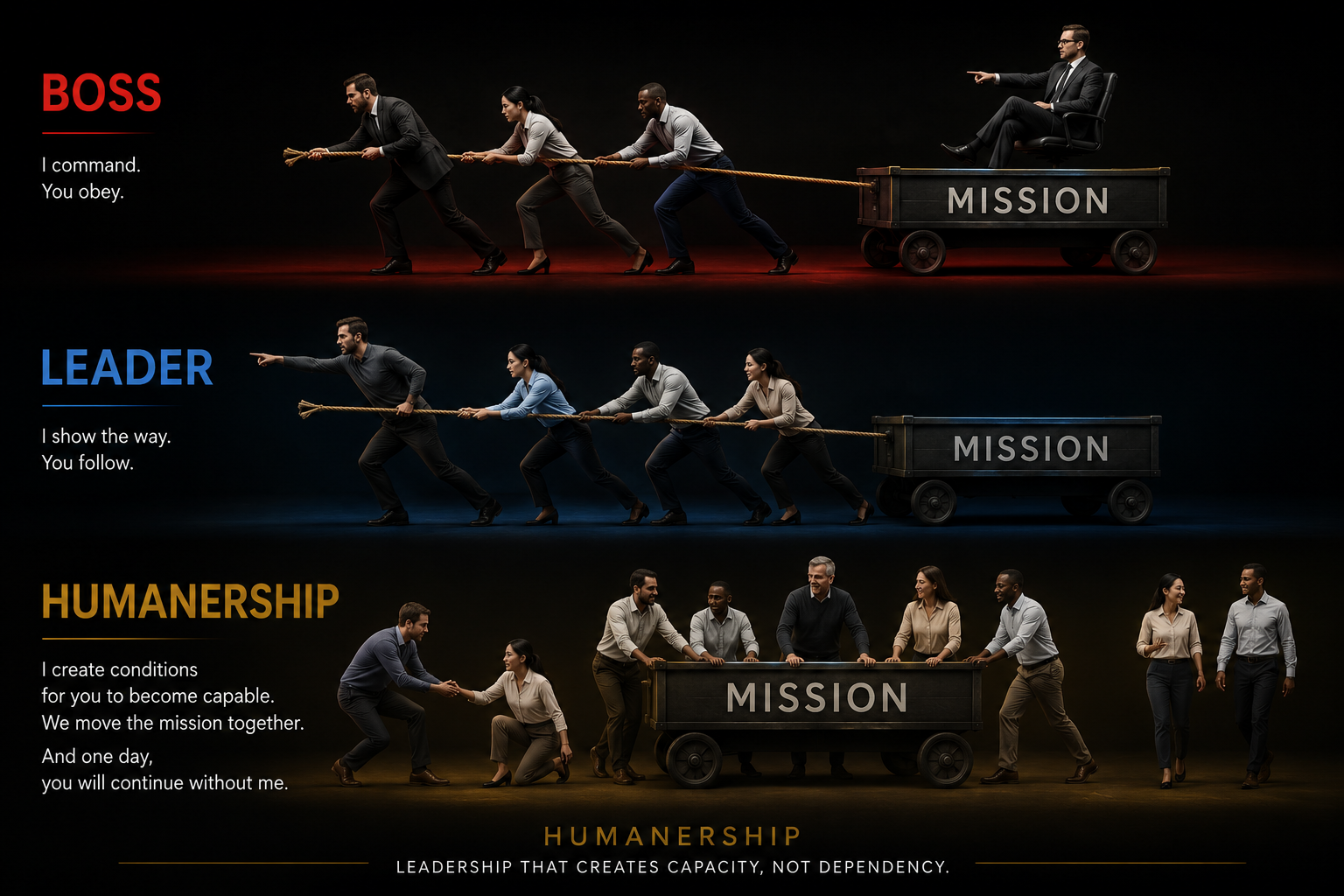
the boss sits on the mission;
the leader pulls the mission;
the Humaner creates the conditions so that the mission can be carried by people who have become capable.
None of these approaches is wrong. Humanership is an evolution of them and a complementary perspective.
Humanership does not ask anyone to choose between being human and being effective.
It holds that lasting performance can be built with and by people, rather than against them.

Every philosophy has its possible drifts. Naming them is part of the practice.
Being human does not mean avoiding difficult conversations.
Helping someone does not mean systematically deciding for them.
Serving does not mean sacrificing yourself.
Building a strong human relationship must not prevent autonomy.
Humanership must remain confronted with real constraints: performance, resources, conflict, deadlines and accountability.
The greatest threat is to speak of humanity without changing behaviour.
A philosophy does not survive alone. It needs ground to grow in.
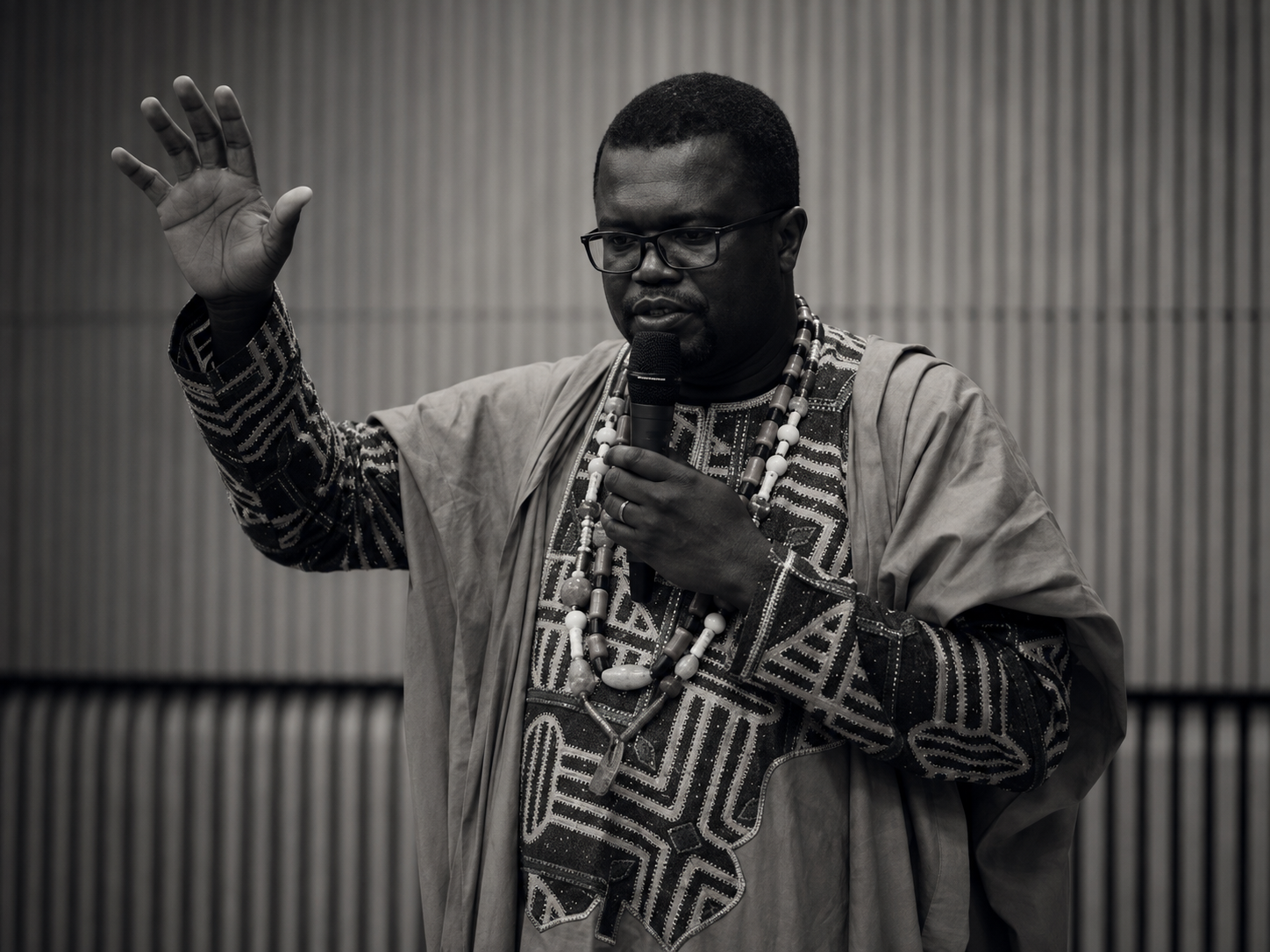
We believe that leading is a responsibility before it is a privilege.
We believe that performance never justifies losing the human being.
We believe that authority must create capability, not dependency.
We believe that serving can be a way of growing.
We believe that protecting does not mean controlling.
We believe that passing on is a responsibility of the leader.
We believe that humility is a strength.
We believe that no one can grow in another person's place.
And we believe that a leader should not be judged solely on what they accomplish while they are there, but also on what keeps growing after they leave.
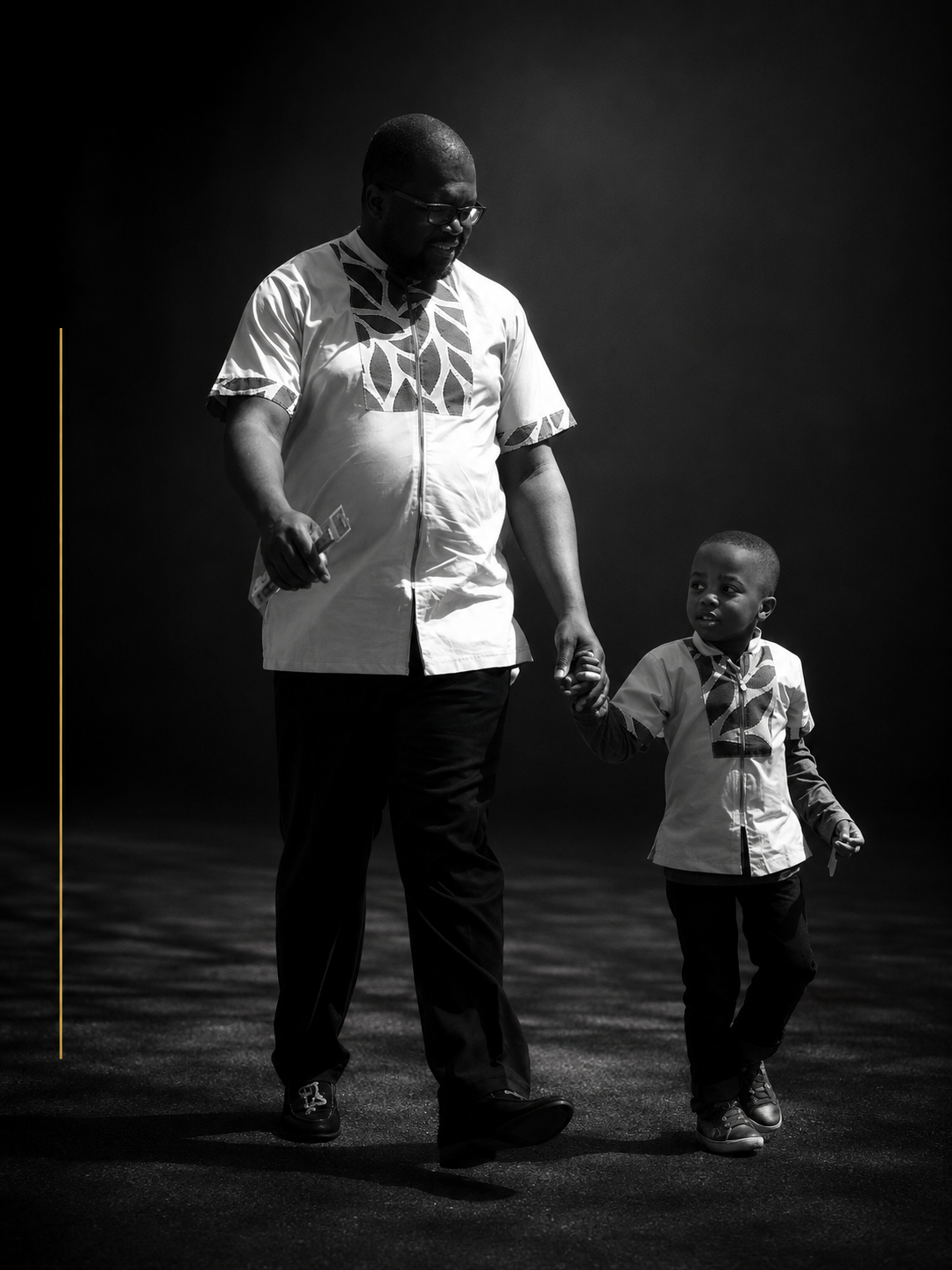
Humanership is not invented.
It is revealed.
In the way we decide.
In the way we serve.
In the way we pass on.
In the way we help others grow.